Welcome

If you're new here, read this!

 Hello!  Thanks for visiting my blog. Here you'll find a ton of stuff - over 460 articles...everything from beer reviews, interviews, wi...

Saturday, February 22, 2014

Rhone Valley Vineyards - 2012 "La Ferme Julien" red blend (France)

Earlier in the week, my colleague Sandra informed me that February 18th was "National Drink Wine Day." Now, I've never heard of this holiday, but immediately I liked it. Around my apartment, every day is National Drink Wine Day, but I figured if such a day (officially or unofficially) existed somewhere, I needed to be a part of it.

I also realized that a lot of the wines I review are specialty bottles that sometimes can be expensive and hard-to-find. In fact, most of the bottles I have reviewed have been ones furnished by special order from good friend and wine merchant Charles Bissell, and then have spent several years in my cellar and aged to their perfect peak of taste. So today I'm going to help out my retail- and budget-minded readers and review a wine on the cheaper end of the spectrum that's readily available. Today's review - in honor of National Drink a Bottle of Wine and Watch House of Cards Day - is a $6.00 red table wine from Trader Joe's.


This wine is a blend of Grenache, Syrah, Carignan, and Cinsaut grapes grown in the Rhone Valley of France, on the slopes of Mont-Ventoux in the wine-growing AOC of Côtes du Ventoux. "AOC" stands for appellation d'origine contrôlée, which is a French certification given to certain food and drink produced in certain geographical indications within France. This is essentially a "geographic mark of production" that allows the consumer to know they are consuming, for example, authentic Bordeaux Supérieur actually grown in Bordeaux instead of some other imitation red marketed under that name. The consumer will also know that anything marked AOC is produced under a set of other standards, including aging guidelines, ingredient purity and origin rules, and rules governing the use of naming conventions.

It's worth noting this wine is a screwcap wine. Popular opinion has always held that screwcap wines were cheaper and less desirable than traditional corked wines. And I think this opinion is shifted at least a little bit, much like the opinion of canned beers vs. bottled beers. Screwcaps are a better way of sealing the wine and ensuring it stays sealed. Plus, with a screwcap, you don't have to worry about a cork blight or a loose cork or getting cork in the wine.

The wine pours nicely, with very little aroma coming from the glass. I let it sit for 10 minutes, as one does, while House of Cards loaded and my dinner was cooking. As I was about ready to sit down to eat, I stuck my nose in the glass again. Nope, still no aroma.


The wine is a pleasing red garnet color when held to the light.


The taste is sour and tart, with a grape and ripe strawberry finish. It leaves a slight metallic / earthy aftertaste, which I kind of like. I realize this may not sound tasty. But it is. One thing this wine lacks, which is a good thing, is the caustic alcohol taste endemic to most cheap wines. What makes this wine worth noting is that despite the price tag, it does not carry any harsh burn or tannic alcohol aftertaste. Of course, when you buy cheap wine, most people understand it's going to be less refined than say, a velvety-smooth $25 Terra Noble pinot. But La Ferme Julien surprised me with its lack of burn and nice earthy flavor.

It's a good wine to have on hand if you're serving pizza, or pasta, or maybe some delicious risotto balls from Pete's Apizza. It's also tasty to have on its own, especially if you like that tartness in a red. It's cheap enough to have every day, or to grab on the way to a friend's house for movie night. It's solid, tasty, and worth sharing.

Tuesday, February 18, 2014

Fremont Brewing Co. - Bonfire ale (Washington state)

Today's review is one I should have done a while ago. This fine example of a winter ale comes straight from Seattle, WA, courtesy of my brother Daniel. He sent me some last year, and when I told him how much I liked it, he went out of his way to find more for me. Thanks, dude!

Fremont Brewing Co. makes some great stuff. I'm a huge fan of theirs and have enjoyed everything I've tried: Bonfire, Fremont Harvest, their tasty Summer, and others. The Bonfire ale is their 6.00% ABV fall / winter seasonal, and it's really exceptional.


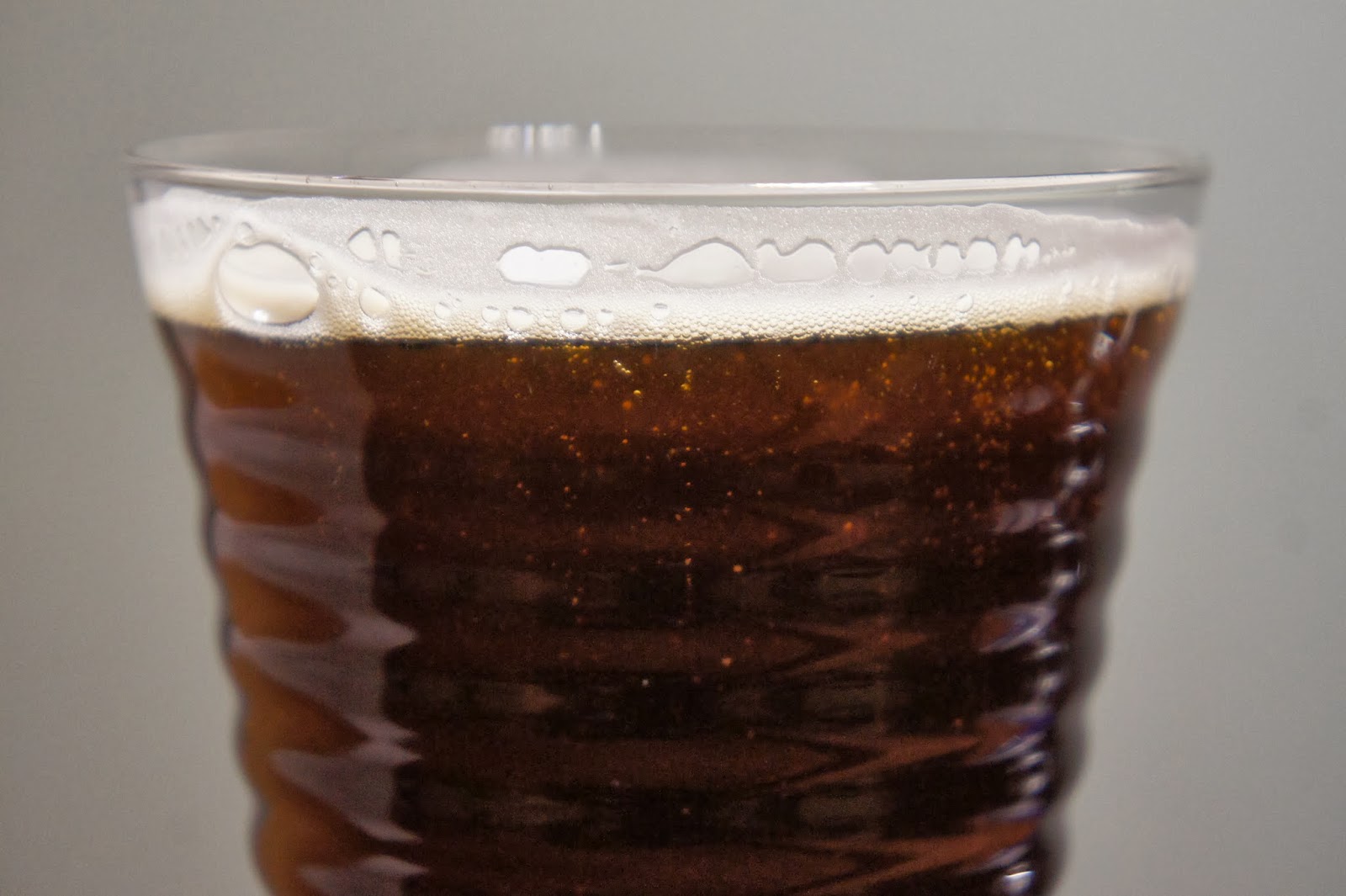
The pour is swift, the color a pleasing deep caramel brown.


The nose is almost non-existent, with just vague hints of nuttiness and dark wheat detectable.

The taste is really where this beer shines. There's a smooth, straightforward ale taste tinted with rye and nuts. It lacks any bitter taste or burnt taste, but has a silkiness that is really pleasant. One of my major gripes about winter beers is the burnt chocolate / coffee tastes that a lot of them seem to have; some beers successfully avoid this trend. In this way, the Bonfire reminds me of Maui Brewing Company's Coconut Porter, which I reviewed about a year ago. The consistency is similar, and the delicateness of the taste is common to the two.


Also, nice little bit of sediment in the glass.

This post is a good time to talk about drinking. And not in the D.A.R.E. sort of way, either. There's an amorphous quality of beer called "sessionability" that relates to how well you can enjoy it over a sustained period of time. In other words, how well a beer "drinks." In the wine world, we call such a wine a "quaffing" wine. A good "session ale," as they're called, is one that's easy to drink, enjoyable, and one that's tasty enough to keep you interested. Usually, session ales don't have a high alcohol content or crazy tastes. Session ales are the ones you bring to parties - beers that can be enjoyed idly and with friends over conversation.

I feel that the Bonfire fits well under that category. The Bonfire is very tasty but also is straightforward enough that I could see myself enjoying a beer or two while watching a movie and not having to pause to appreciate the beer. This is not to say Bonfire isn't worth appreciating - far from it - but it's both delicious and sessionable, which makes for a winning combination.

Examples of non-sessionable ales are specialty brews like Rogue's Voodoo Doughnut, Stone's Old Guardian barleywine, and Dogfishead 120 minute IPA. Also, I find most IPAs (with the exclusion of Red Hook's Long Hammer) don't "session" well. Some are just too bitter, but beyond that the taste is so strong and up-front that it's hard to ignore. Non-session beers are ones you have to focus on, beers that have such strength, such powerful tastes and intense flavors that you can't ignore. A session beer is something that's delicious enough to enjoy and, if you so choose, not think about. And I think Bonfire fits in very well to that category.

Like many of the West Coast beers I review, I think Bonfire is only available in Seattle (and then, only during the fall/winter seasons.) But, if you happen to be out that way and see it on draft, do yourself a favor and have a pint. You won't regret it!


Wednesday, February 5, 2014

Wine Flash: Chateau de Lascaux - 2009 Coteaux du Languedoc (France)


Today's wine is a 2009 Coteaux du Languedoc produced by Chateau de Lascaux, headed by vintner Jean-Benoît Cavalier.  It's a French blend of 60% Syrah, 30% Grenache, and 10% Mourvedre. It paired well with my homemade chicken marsala, and (in my opinion) the wine is a good example of the Languedoc appellation. It wasn't too expensive and I'll probably pick up another couple of bottles next time I come across it. It's approachable and serves well as an everyday wine and a table wine, especially when serving Italian dishes.


Sunday, February 2, 2014

Raymond Vineyard + Cellar - 2009 Field Blend Red (California)

First off, let me apologize for the delay in posting. I know it's been a while since my last post, but intensive work obligations, travel, and a brief cold kept me occupied for some time. But, I'm feeling better, and back to posting.

Today's wine is one I've in my cellar for quite some time. It's a 2009 California red wine produced by St. Helena, CA-based Raymond Vineyard + Cellar. This wine, called a field blend, is made up of a whole bunch of varietals including Merlot, Cabernet Sauvignon, Syrah, Petit Syrah, and Zinfandel. According to popular lore, a "field blend" is a type of wine made in the early days of California vineyards when many grapes were planted together, and rather than separating out the varietals and making separate wines, the whole vineyard was blended together to make a blend - hence "field blend."

I don't have too much experience with this vintage, or appellation, but since the bottle has been kicking around my cellar for three or four years, I figured I should finally see how it turned out. I admit that I had no idea what it was going to taste like when I opened the bottle, and that was part of the fun.


Before opening it, I trekked out to Trader Joe's in Foggy Bottom to get some dinner ingredients. I wanted to make a big, fancy dinner and wanted one of my nicer bottles of wine to pair with it. I'm pairing the Field Blend with a garlic-and-oregano-glazed roasted pork chop, made from scratch, with saffron rice with sauteed mushrooms, and fresh spring mix salad.


The wine poured nicely, and the nose is one of dark berries and plums. I was really surprised at the fruitiness of the aromas. The color of the wine is dark, and when held to the light it's a nice, clear red. Look at that color!


The taste really blew me away. The wine delivered very strong flavors of strawberries and cherries and give way to a very smooth finish of plums. The aftertaste is very fruity and fresh and lingers for quite a long time. This has got to be the juiciest, fruitiest wine I've ever tasted. No alcohol taste. Smooth in all aspects. This wine is bright, full and lacks any harsh tannic tastes.


We have a real winner here. It's one of the purest, fruitiest wines I've ever had. Total fruit flavors. Unfortunately, it wasn't the best pairing for dinner, since the fruit taste was a bit overpowering for the delicate flavor of the meat. But I'd definitely suggest this for a drink-anytime wine.

I'm going to be on the lookout for this wine again, if the 2009 vintage is any indication of the common taste. If it were not for the cost, I'd probably buy a case and keep it on hand. I strongly recommend you all to try some, too, if you can find it. You won't regret it!


Monday, January 20, 2014

Boston Brewing Co. - Sam Adams New World trippel (United States)

I came across today's beer at Costco. I knew in the back of my head that Sam Adams released special, experimental brews, but I had not seen one in the wild until I found this three-pack special. It's called the "Barrel Room Collection" and features three bomber-sized beers in cool bottles. There are three: the Tetravis, the Thirteenth Hour, and the New World. Today I'll be reviewing the New World, a trippel.


The New World is Sam Adams' take on a Belgian trippel. I can't resist a good, spiced, unfiltered Belgian, so this was of particular interest to me (as is the Tetravis.) I also really like the bottle, it reminds me of some Old World-style drinking goblet. Something you'd find on a shelf in a rustic French hamlet pub or something.


Nice pop from the muselet-topped bottle. The pour was swift and formed a nice, frothy head. There were serious aromas of spices and an interesting, tangy smell I couldn't immediately identify.


The beer is a cloudy orange, as it should be. There are lots of little bubbles in there.


It was tasty! The taste is on par with spiced Belgian ales, providing lots of floral notes, honey, sourness, and strong alcohol tastes. I'm having a hard time nailing down the right word for it, but there's a taste that's common to most Belgian beers. Yeast, maybe? Anyways, this has it. And it's pretty good. The finish is clean, which is nice, and full of floral tastes. There's no burn at all, just a pleasant aftertaste of honey and spices and alcohol.

Judging by this, Sam Adams has done a good job venturing into the spiced Belgian ale market. This beer is a pretty solid example of what a Belgian beer should be. My overall opinion of Sam Adams is that they make good beer, but are rarely innovative or unique. I enjoy their beers, and have only had a few that I haven't enjoyed, but they don't push the envelope like Southern Tier, or Boulevard, or Great Divide does. And I don't expect it to. Those breweries are constantly coming out with new and crazy beers, while Sam Adams sticks with good, drinkable session ales. The New World was a serviceable take on Belgian beers, but wasn't anything out of the ordinary. That doesn't mean you should turn it down if you see it, especially at the Costco price.

Now all I need is some Chimay-washed cheese, fig jam, and some unsalted butter-laden baguette rounds to complete this pairing!


Wednesday, January 15, 2014

Beer Flash: DC Brau - Penn Quarter Porter

Last night I tried DC Brau's seasonal porter, the Penn Quarter Porter. Nice and thick with spice notes.


Pretty tasty - seek it out if you can!


Saturday, January 11, 2014

Habanos S.A. - Fonseca Antiguo Puro la Habana (Cuba)

Happy New Year, readers!

Today's review, the first of the 2014, is something special. Today I'll be reviewing a genuine Cuban cigar made by Havana-based Habanos, S.A., under the label "Fonseca." Habanos S.A. is the Cuban state-run cigar manufactory that produces all of the Cuban cigar labels. All cigar commerce out of Cuba is handled by Habanos S.A. The cigar is a mid-strength corona-sized cigar wrapped in Japanese tissue paper - a tradition started by cigar baron Don Francisco Fonseca in the 19th century and continues to this day.


I'm not going to get into the weeds of embargo policy, or issue any statement about the actions of the current Cuban government (that's not the point of this blog) but it bears mentioning that I hold a philosophical opposition to the United States' current trade embargo with Cuba. I feel we should move past the archaic Cold War-era mentality and encourage free trade between nations. Cuba does not pose a threat to the United States and we should not continue to punish American citizens and Cuban citizens by denying them potential lucrative trading opportunities.

The United States is one of the only nations in the world NOT to benefit from the Cuban cigar trade. And while I understand the politics of this - and the interests of competing tobacco-producing nations like the Dominican Republic and Honduras - it's still a shame that we are missing out on some good tobacco (and rum and tourism.)


Let's talk about the cigar itself. This is my third Cuban cigar, my first one being a Cienfuegos torpedo maduro a few years back. That one was super strong, oily, and gave me a headache. The other was a genuine Cuban Montecristo, but in a small format. Today's cigar I got as a gift for my birthday last year, and I've been saving it for a special occasion. It was my first cigar of 2014.

The cigar was wrapped a little tightly, as you can see:


I wrapped it in a hot, moist paper towel for a few minutes to soften it up and that seemed to work OK. The cigar lit up easily enough, but it didn't draw like some I've had - probably as a result of the tight rolling. I finally got it going with liberal application of a match (since unless you want to taste butane, don't use a lighter for a cigar.)


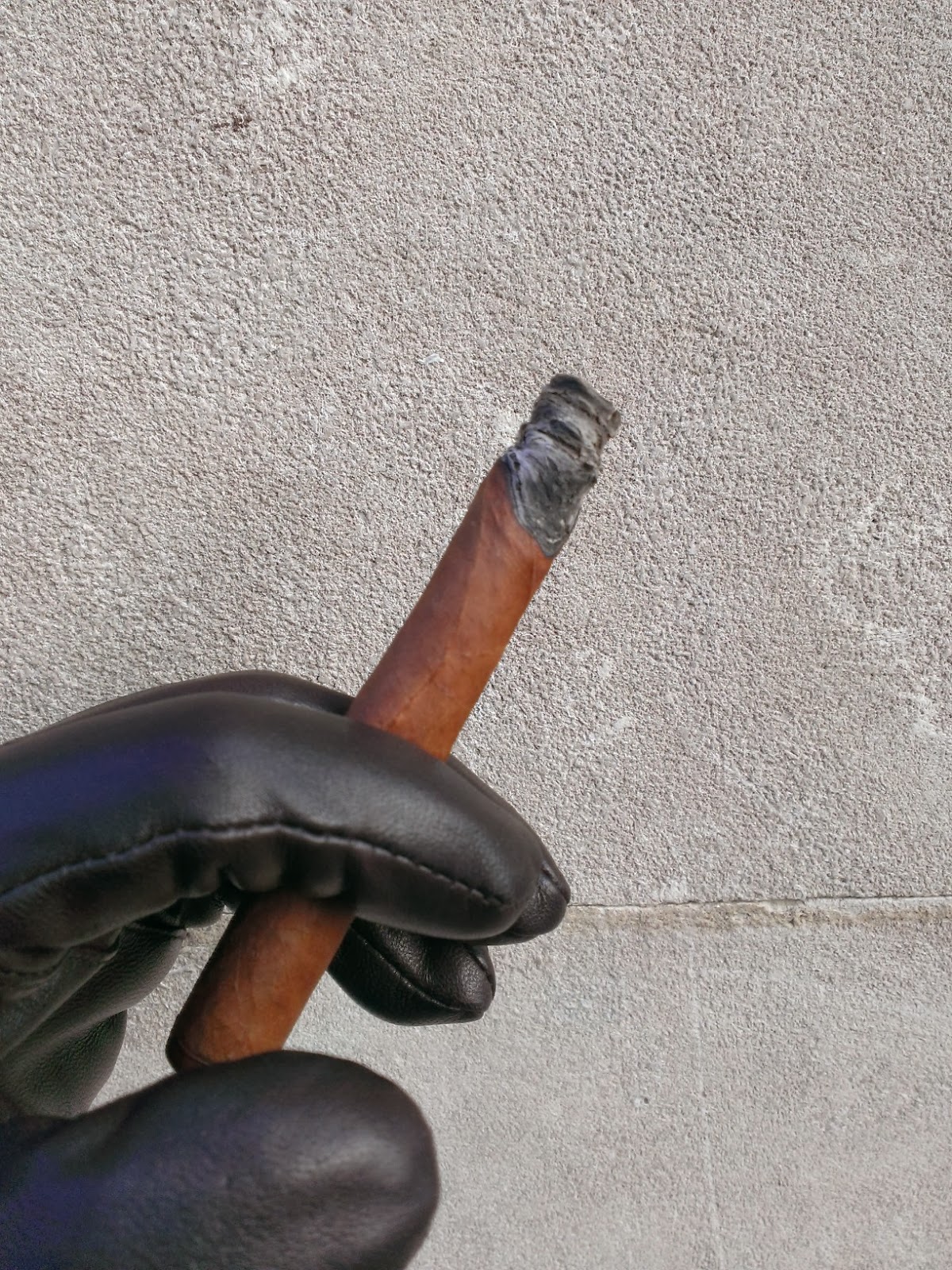
The smoke itself was grey/white, with the cigar's ash a deep grey. The ash held on well, which some say is a sign of a well-made cigar.


As you can see, it was burning a bit unevenly but didn't unravel or anything. Which was nice.

The flavor is the real treasure of this cigar. While previous exposure to Cuban tobacco was a little overwhelming, I'm pleased to say the Fonseca Antiguo delivered delicious, mellow and subdued flavors of leather, tobacco (yes, it's a flavor, and no, not every cigar tastes like it.) The finish was dominated by notes of cinnamon and vanilla. The aftertaste was one of hickory flavors, which was kind of interesting since I haven't come across many cigars that have that flavor.

I was able to smoke it down to ~2" long, and took me about 45 minutes to finish it. It didn't get bitter towards the end, which a lot of smokes do, but instead unraveled and went out. I re-lit it once (which is OK) but after the second time going out, I decided to put it down.

All told, I'd say this is one of the nicest cigars I've had in a long time. What I liked most about it was the solid flavor throughout and the mellow-yet-flavorful taste profile. One thing I look for in a cigar is it's ability to maintain the taste all throughout and not burn off quickly. Some cigars don't hold up well, either, and unravel or crack mid-smoke, causing it to burn harshly or unevenly. Or, as noted above, the cigars can't stay lit. This cigar didn't seriously do any of those things.

My opinion on Cuban cigars is this: they're tasty, and fun to have as a treat, but they're not spectacularly better than Dominican cigars, or Connecticut cigars, or Honduran. Good Cuban tobacco is just as good as good Dominican tobacco. What's fun about smoking a Cuban cigar is that you get a different taste - the tobacco grown in Cuban tastes different from Honduran, or Cameroonian, or Nicaraguan.  The soil is different. The tobacco is a different strain. So having a taste of Cuban tobacco introduces you to a different flavor profile that you might get commercially, and that's really neat.

When it boils down to it, a lot of the mystique surrounding Cuban cigars is due to the fact they are prohibited in the United States. Since they are rare and unavailable, they hold a special coveted place in a cigar smoker's humidor. I was pleased to have one, and I hope to have more in the future.